
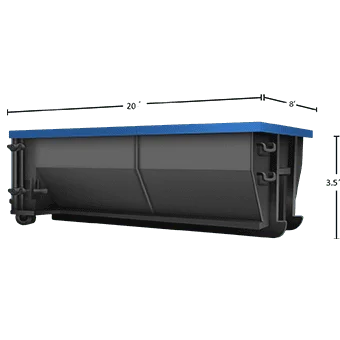
Show the route from the entrance to the container
A roll-off container needs a placement plan that accounts for the truck, the loading activity and the eventual pickup. Describe the whole approach so the provider can assess the offered equipment against the actual site.
Mention turns, overhead obstructions, slopes, restricted gates and surfaces that are soft or newly finished. Ask for the clearance and preparation needed for the actual vehicle. Do not use a different supplier’s dimensions as approval for this approach.
Reserve enough space for the way the job will load
Discuss the container door if one is offered, the route used to bring debris and any interaction with pedestrians or other deliveries. Have the property owner and provider review proposed surface protection. A protective board does not by itself make an unsuitable location workable.
Plan for the site to change around the container
Later fencing, stored materials and parked vehicles can remove the clearance that existed on delivery day. Keep the reviewed retrieval route available throughout the hire. Ask the provider to arrange any relocation and to reassess changed access before pickup.
Finish loading under the agreed terms
Follow the accepted-material and fill instructions, then request the required removal or exchange. Identify any site activity that affects the agreed collection window. Keep a contact available to resolve the route rather than leaving an unreviewed alternate position for the driver.
Questions before you book
Can I move the container when the job changes?
Contact the provider to review and arrange a move. A new position can change equipment handling, property risk and retrieval access.
Does a container fitting on the driveway prove delivery will work?
No. The truck’s approach, manoeuvring and placement requirements must also be reviewed.